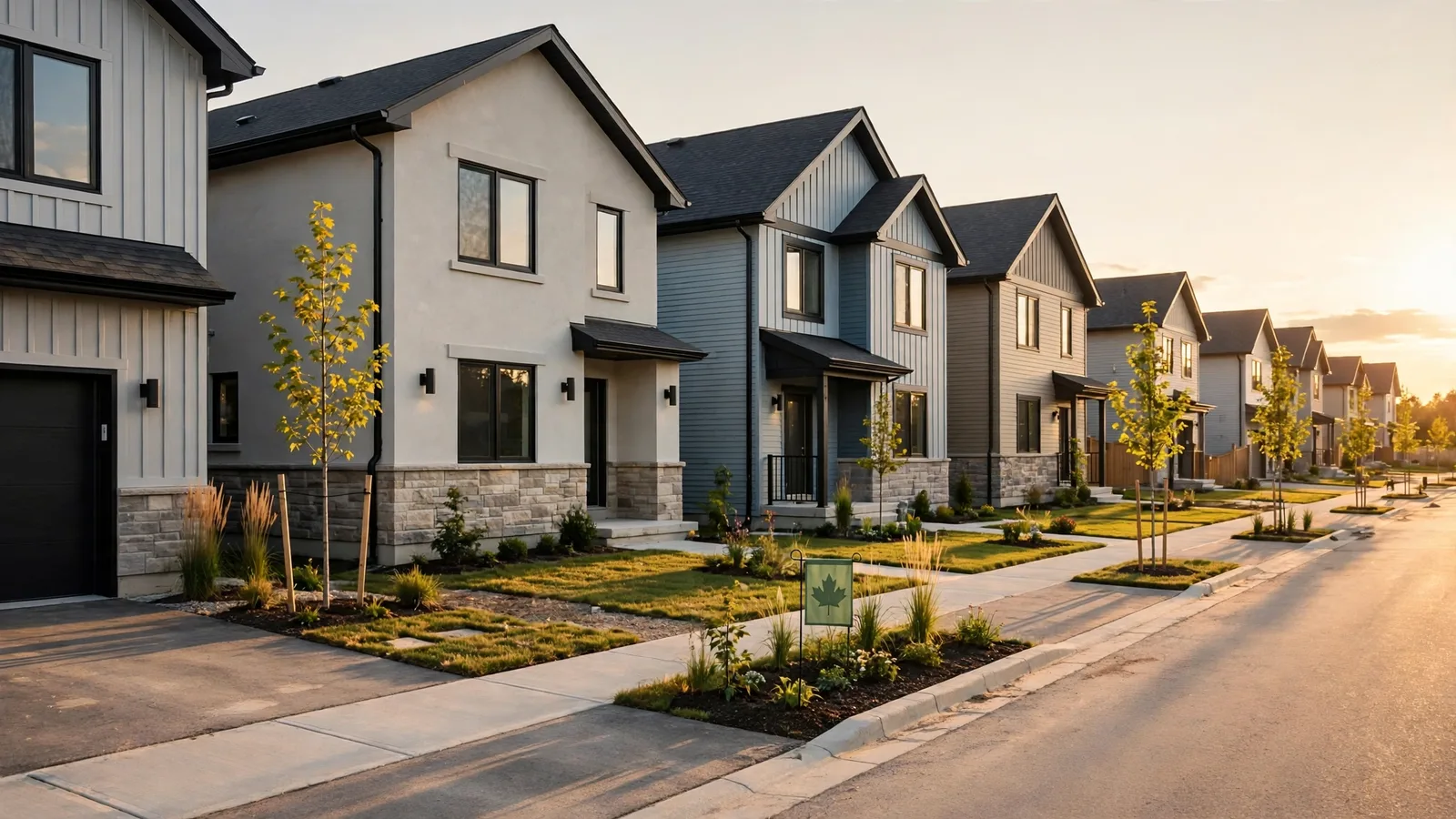
What Is a Stacked Townhouse? How Ontario's Two-Storey Stack Works
Two townhouses stacked on top of each other, each with its own front door — usually the cheapest way to own a multi-level home in the GTA, and the format first-time buyers ask about most.
The definition
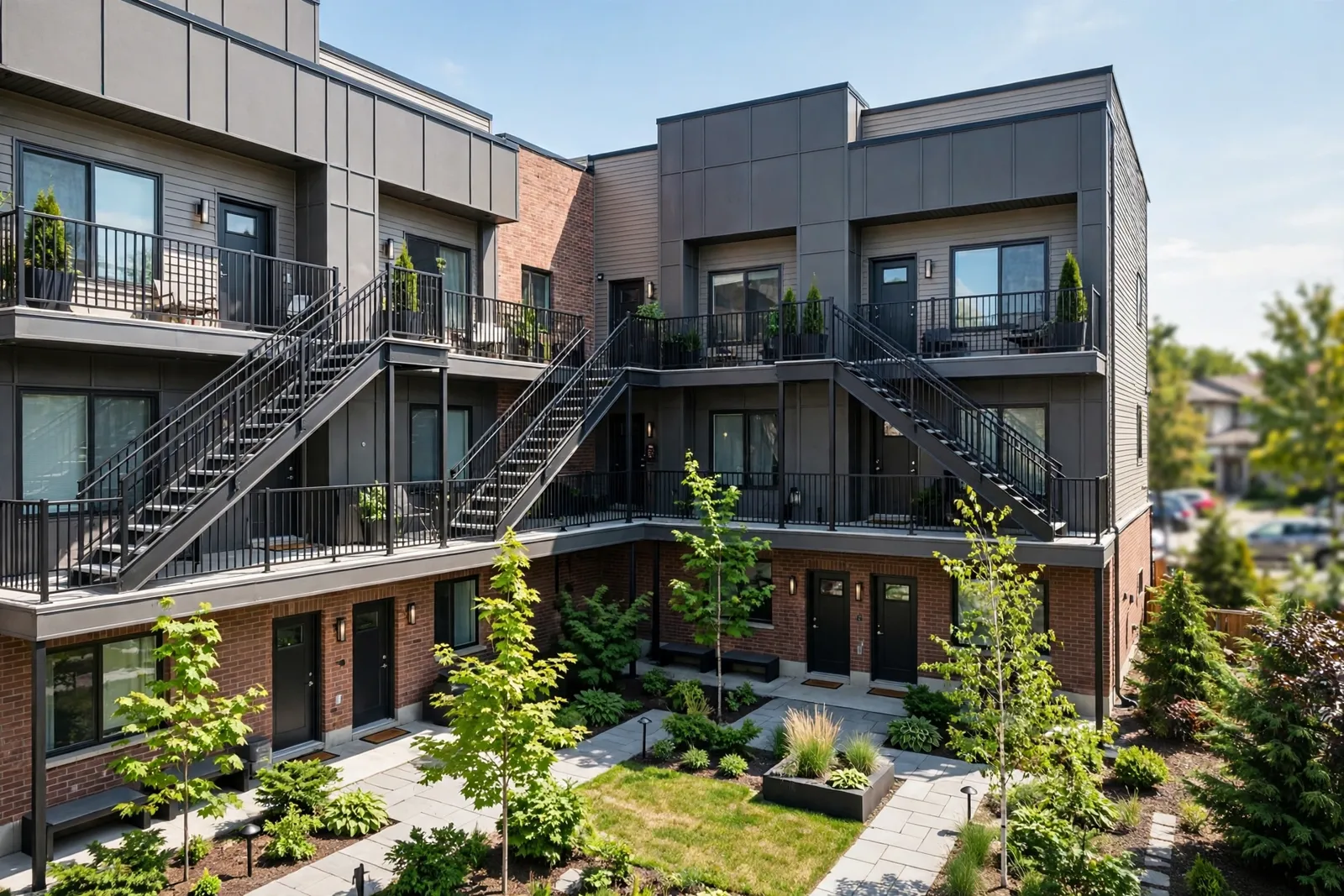
A stacked townhouse is exactly what the name says: two townhouse homes built one on top of the other in a single low-rise block. The lower unit sits at ground level; the upper unit sits above it, reached by its own exterior staircase. Each home has a front door that opens directly to the outside — no hallway, no elevator and no lobby. From the street, a stacked block can read as a small apartment building; from your own door inward, it lives like a house.
Inside, each unit is a self-contained home spread over one or two floors. A lower unit typically lives at ground level, with a small yard or patio behind it. An upper unit puts its living room at the top of the stairs and trades the yard for a balcony or rooftop terrace. Stacking two homes on one footprint is how builders draw an entry-level price out of expensive GTA land.
How it differs from a condo apartment
Most stacked townhouses are condominiums in law, but living in one feels nothing like a condo apartment. You come home through your own front door from the street, not through a parking garage, a lobby and a corridor. Your home usually spans two floors, with an internal staircase, so it reads as a small house rather than a flat plan in the sky. And the building itself is far simpler than a tower — no elevators or underground garage to run. What the two forms share is the machinery: a condominium corporation manages the common elements, and every owner pays a monthly fee toward them.
How it differs from a regular townhouse
A conventional townhouse stands in a row with neighbours on one or both sides — but nobody above or below. The whole vertical slice, from the ground to the roof, is one home. A stacked townhouse gives up the slice. Somebody else's floor is your ceiling, or your floor is somebody's ceiling, and that changes daily life: sound carries between the two homes in a way it rarely does through a side wall, and the upper home's outdoor space is a terrace rather than a garden. The trade is price — sharing a building footprint two ways is precisely why a stacked town usually lists for less than a conventional town nearby. If the townhouse family is new to you, start with what a townhouse is in the regular sense, then come back to the stack.
The tenure question: most stacks are condos
"Stacked" describes the shape of the building, not the ownership — and that distinction decides what you pay every month. Most stacked townhouses in Ontario are condo townhouses: you own your unit, hold a share in a condominium corporation, and pay monthly fees. Freehold stacked towns, where you own the unit and the land under it outright, do exist, but they are the minority. The listing states the tenure; confirm it before you fall for a floor plan. The full comparison is laid out in our guide to freehold vs. condo townhouse.
Living in one
Three things shape daily life in a stacked town. The first is stairs: the upper home lives at the top of an exterior flight, so groceries, strollers and furniture all travel those steps, in February as in July. The second is sound. You share a floor-and-ceiling assembly with a neighbour, and footsteps and music carry through it more readily than through a side wall. The third is outdoor space — a small yard for the lower home, a terrace for the upper, and neither one a full backyard. In exchange, the layouts waste little space on hallways, so a modest square footage often lives larger than it looks.
The costs
Where a stack is a condo, the monthly fee is the cost to understand before you offer. It typically covers the exterior and the roof, the shared stairs and common areas, landscaping and snow clearing, the corporation's insurance, and contributions to the reserve fund; water is sometimes included, heating and hydro usually not. Our guide to condo fees, explained breaks down what a fee buys and how to judge one. Two stack-specific points: with fewer shared systems than a tower, stacked fees tend to sit below high-rise fees — but a fee reflects the corporation's finances, not your usage, so judge it from the status certificate, not the monthly figure alone. On the rarer freehold stack there is no fee, and every exterior cost is simply yours.
Pros and cons
The case for: the lowest-priced route into a multi-level home with its own front door; a house-like layout; a simpler building than a tower, which keeps fees comparatively contained; and some outdoor space of your own. The case against: a neighbour above or below, and the sound that comes with it; stairs as a permanent feature of daily life; no true backyard; and, in the common condo form, a fee and a corporation's rules on top of the mortgage.
Who it suits
A stacked townhouse suits a buyer who wants the feel of a house — own front door, two floors, space that separates living from sleeping — at a price closer to a condo apartment's. It is the classic first rung for GTA buyers who find high-rise living too flat and conventional towns out of reach. It suits less well if a real yard is non-negotiable, if stairs are a problem now or will be soon, or if you are sensitive to noise in either direction — what you hear, and what your neighbours hear of you.
The bottom line
A stacked townhouse is a compromise in the honest sense: two households split one footprint so each can afford a home with a front door of its own. If that trade suits you, browse stacked townhouses for sale and compare uppers against lowers on the same street — the gap between them shows what the format gives, and what it asks.