Freehold vs Condo Townhouse: What's the Difference?
They can look identical from the street — the difference is what you own, what you pay monthly, and who controls the roof, the windows and the rules. How to tell which one you're looking at, and which suits you.
The short answer
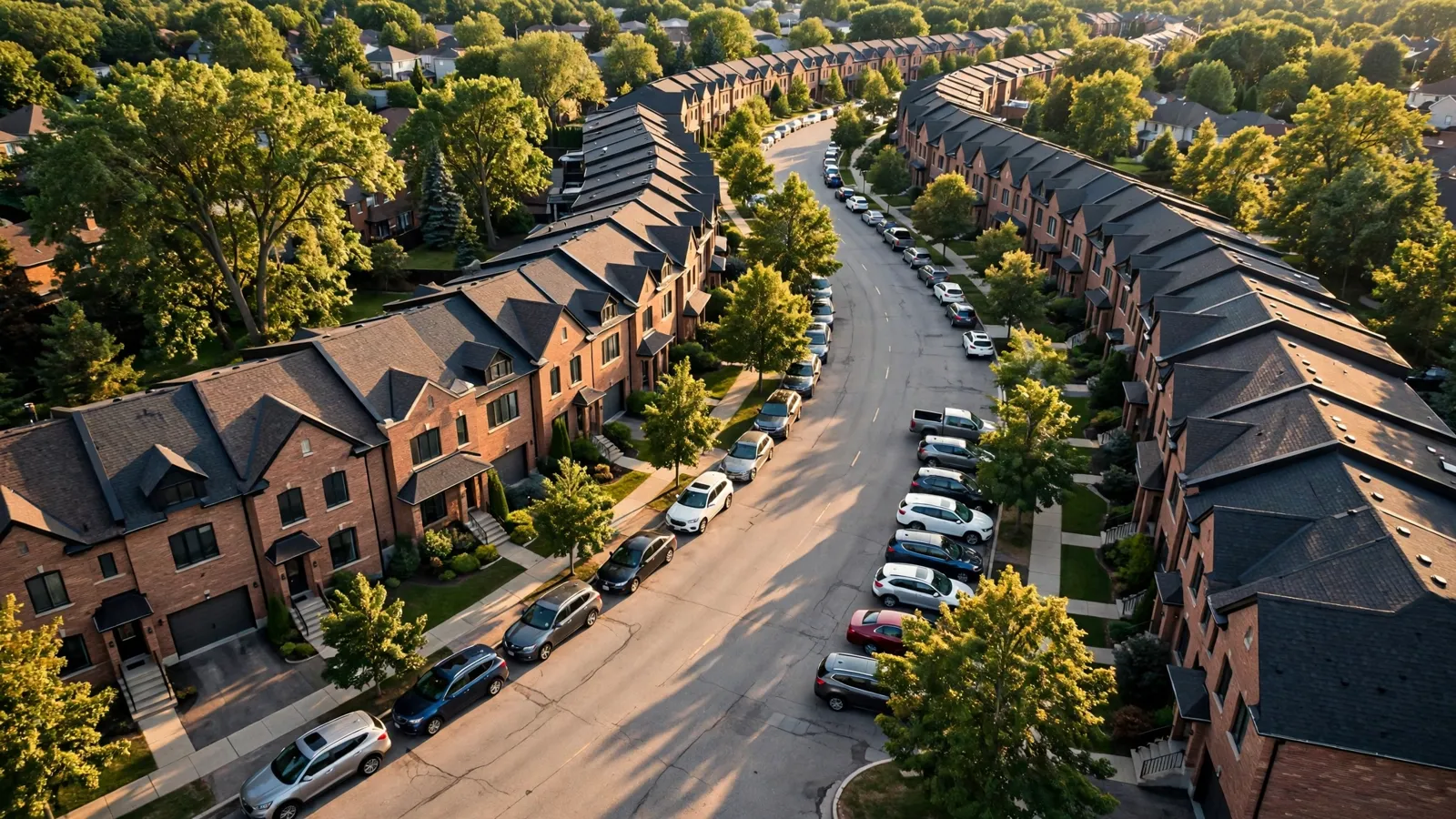
From the street, a freehold townhouse and a condo townhouse can be the same house on the same street, built by the same builder in the same year. The difference is legal, not visual. In a freehold townhouse you own the home and the lot it sits on, and there is no monthly fee to a corporation. In a condo townhouse you own the unit, share ownership of everything common with your neighbours, and pay a monthly condo fee to the corporation that runs it. Everything else in this guide — the costs, the control, the resale math — flows from that one distinction. If the underlying form is new to you, start with what a townhouse is; this guide is about the two ways of owning one.
What you own: freehold
Freehold is the older, simpler form. The deed gives you the house and the land between your lot lines — the front yard, the back yard, the driveway — and no corporation stands between you and any of it. You insure it, maintain it and decide on it, exactly as a detached owner does, just in a row. One wrinkle catches buyers by surprise: some freehold townhouses carry a POTL fee. POTL stands for "parcel of tied land." It means your lot is legally tied to a shared common-elements condominium — a private road, visitor parking, a storm pond or a playground that the surrounding lots share. You still own your house and land freehold, but you pay a usually modest monthly common-element fee for those shared pieces. A POTL fee is not a condo fee for your house; your roof and walls remain entirely yours.
What you own: condo
In a condo townhouse, what you own is the unit — generally everything from the interior drywall in. The roof, the exterior walls, the roads, the visitor parking and the land itself are common elements, owned collectively by all unit owners through a condominium corporation. You elect its board, the board hires a manager, and the corporation insures, maintains and eventually replaces everything on the common side of the line. You also hold a proportionate share of the corporation's assets and obligations, including its reserve fund — the savings account for the roofs and roads of the future. That share is part of what you are buying, whether or not the listing mentions it.
The monthly math
The obvious difference is the fee: a condo townhouse charges one every month, a freehold townhouse (POTL aside) charges none. The fair comparison, though, is not fee versus nothing — it is fee versus the same costs paid directly. A freehold owner buys their own building insurance, pays for their own roof when its time comes, hires their own snow clearing or does it with their own back, and maintains their own exterior, windows and driveway. A condo owner's fee bundles those items — our breakdown of condo fees, explained shows what a typical fee contains — and spreads the lumpy ones, like a roof, across every owner and every year through the reserve fund. Freehold is cheaper in most months and more expensive in the month the roof comes due. Condo costs more, steadier.
Control, rules and permission
Ownership form decides who can tell you what to do. A condo corporation has a declaration, bylaws and rules that can govern pets, rentals, parking, exterior colours, fences, satellite dishes and what you may change on the outside of your own home; renovations inside can require approval too. Before you buy, the corporation's financial and legal health is laid out in the status certificate, which your lawyer reviews — the subject of our guide to the status certificate. Freehold has no board and no rules beyond municipal bylaws: paint the door any colour, finish the basement on your own schedule. The mirror image is that nothing makes your freehold neighbour maintain anything either — a condo's standards protect the street's appearance and, with it, your resale value, whether or not you love every rule.
Resale and financing
Two practical consequences follow you to the sale. First, price: an otherwise identical freehold townhouse usually sells for more than its condo twin, because buyers pay to avoid the monthly fee — the honest way to compare is price plus the fee obligation, not price alone. Second, scrutiny: a condo purchase gives the buyer's lender and lawyer a corporation to examine, and a corporation with a thin reserve fund or a special assessment can chill both. A freehold sale has no such checkpoint; the building itself is the whole story. Neither effect is decisive on its own, but together they explain why the two forms, side by side, are rarely priced as equals.
Which one suits you
Choose freehold if you want control, dislike monthly obligations beyond the mortgage, and are disciplined enough to self-fund the big repairs — treat the absent fee as a bill you owe your future self. Choose condo if you prefer the exterior and the big-ticket items handled and budgeted by someone else, travel or work hours that leave no time for contractors, and are comfortable living inside a reasonable set of shared rules. Either way, read the listing's tenure line before the floor plan. In townhouses, the ownership is half the product.
The bottom line
Freehold vs. condo townhouse is not a question of better and worse; it is a question of who holds the roof — you alone, or a corporation you co-own. Settle which arrangement fits your budget and temperament, then browse townhouses for sale with the tenure filter in mind, and compare candidates on total cost, not asking price alone.