What Is a Townhouse? Meaning, Types and Costs in Ontario
A townhouse is a home in a row, sharing walls on one or both sides — the middle rung of Ontario ownership, where you get a house's floor plan on a narrow lot, and where the freehold-versus-condo question matters more than the brick. What the term means, what you own, the POTL fee people miss, and who a town suits.
The definition
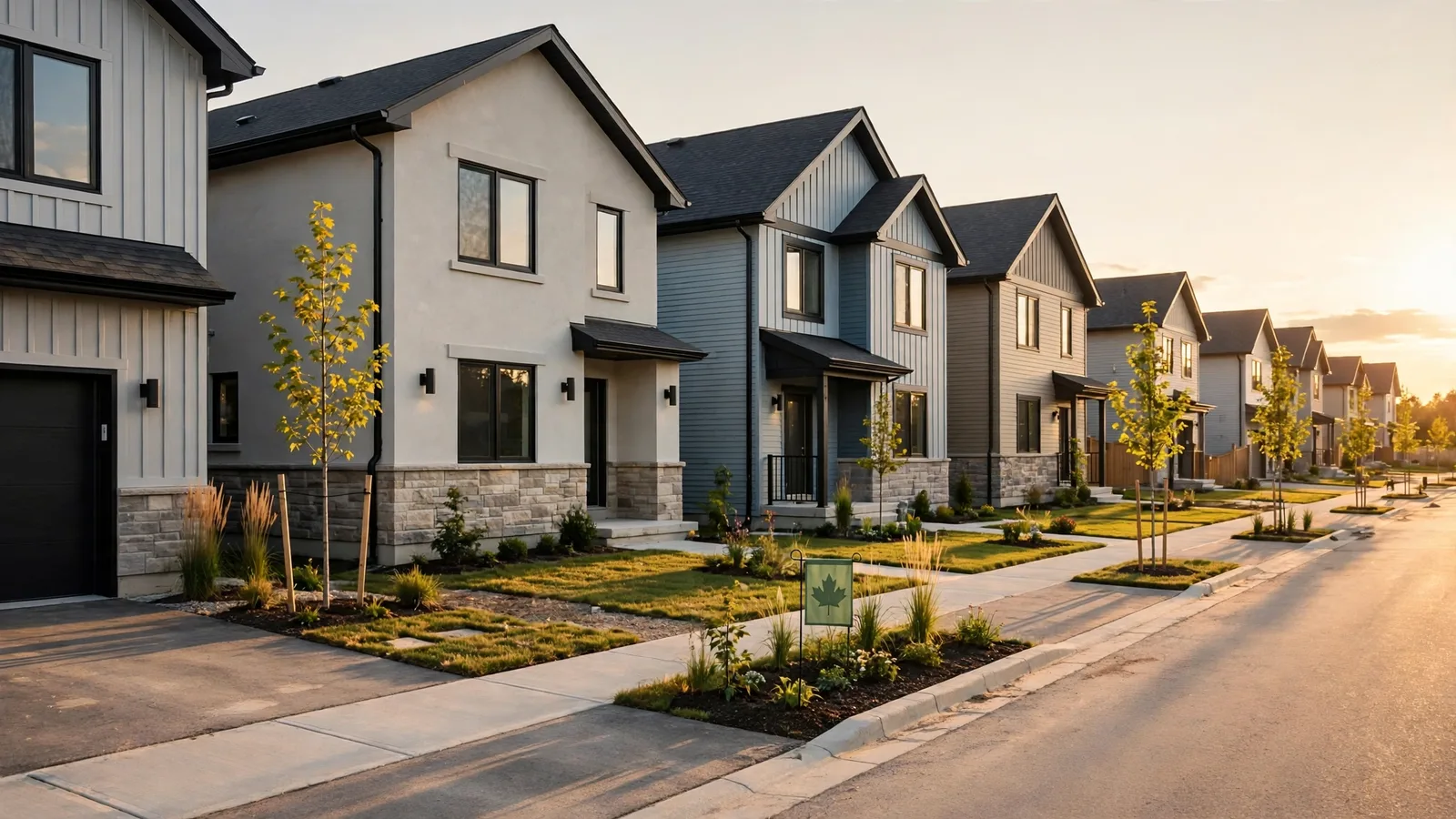
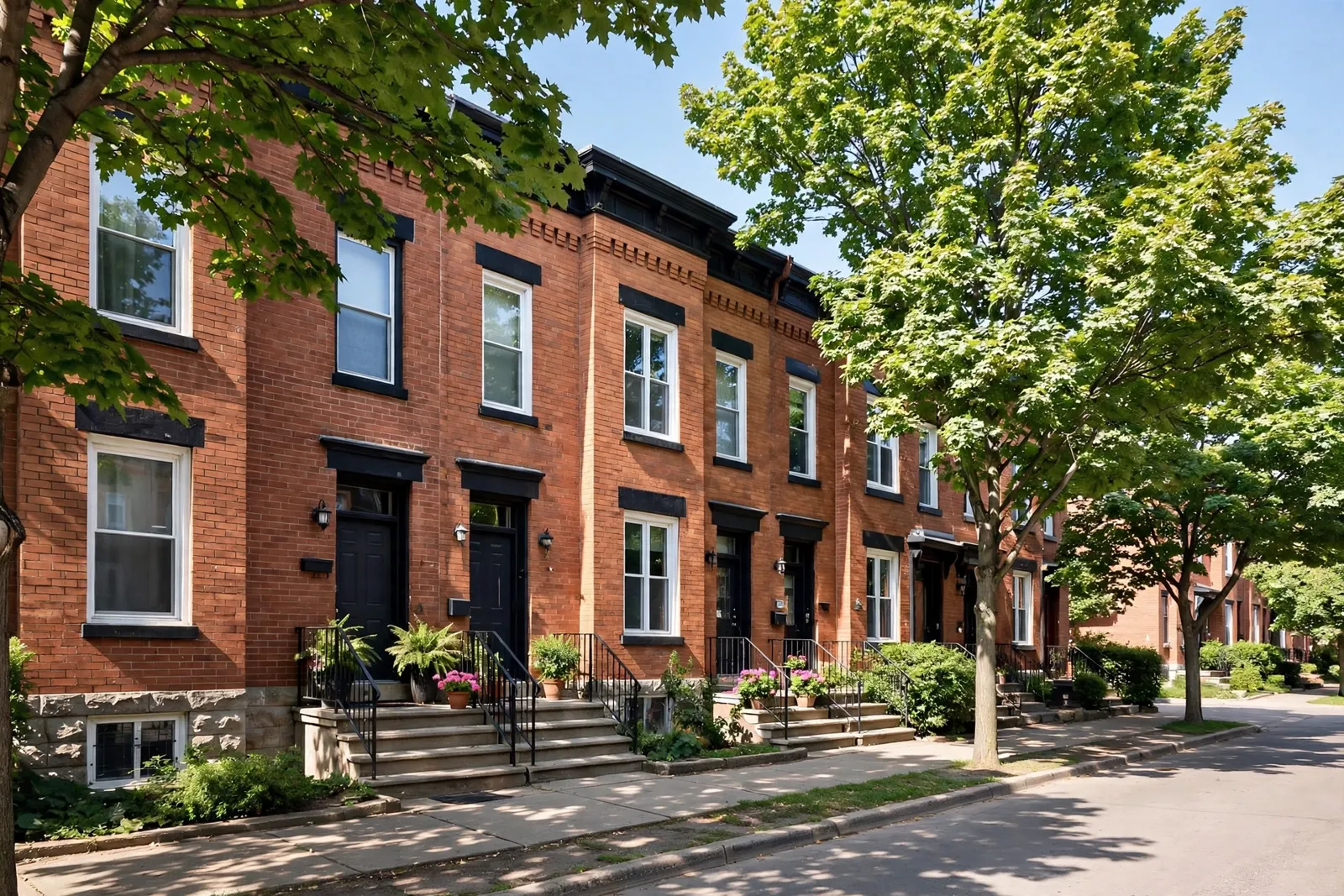
A townhouse is a home built in a row of similar homes, attached to its neighbours on one side or both. It stands on its own narrow slice of land, has its own front door at street level, and rises two or three storeys in the footprint a detached house spreads across one or two. "Town" tells you the shape — a vertical home in a row — but not who owns what. That part is decided by tenure, and it matters more than most buyers realize.
Position in the row matters: an end unit is attached on one side only, with extra windows, a wider lot and more light; an interior unit is attached on both sides and typically carries the lower price.
Townhouse vs. detached, semi-detached and condo
On the ladder of shared structure, the townhouse sits between the semi-detached and the condo apartment: more shared wall than a semi, no open space like a detached — in exchange for a lower price and a newer build.
| Form | Shared walls | Land | Monthly fees |
|---|---|---|---|
| Detached | None | Your lot, entirely | None |
| Semi-detached | One, with one neighbour | Your half-lot | None |
| Townhouse | One or both sides, in a row | A narrow lot, or none if condo | None if freehold; condo fees if condo |
| Condo | Walls, floors and ceilings | A share of the whole, held by the corporation | Condo fees |
Against a detached house, a townhouse trades land and privacy for price; against a semi-detached home, it trades the single-neighbour pairing for a row and often a smaller lot; against a condo apartment, it still offers a house's floor plan and a private entrance.
The two tenures: freehold and condo
Two townhouses on the same street can look identical and be owned completely differently. A freehold townhouse is owned the way a detached house is: building and lot are yours, no condo corporation, no monthly condo fee. A condo townhouse belongs to a condominium corporation. You own your unit; the corporation owns and maintains the exteriors, roofs, roads and shared spaces, and you pay a monthly fee toward all of it.
The choice changes your monthly costs, maintenance list and rules — the full comparison is its own guide: freehold vs. condo townhouse. Short version: freehold means more control and responsibility; condo means a fee, and someone else holding the ladder.
The other townhouse: stacked towns
The stacked townhouse is the newer variant: two-storey units stacked two high in a low-rise block, one household above another. Stacked towns are almost always condominium tenure and sit a rung below the traditional row town in price — if a listing looks like a townhouse bargain, check whether it is stacked. The form has its own guide: what is a stacked townhouse.
What you own and what you maintain
With a freehold townhouse, the maintenance list is the detached list, shortened: your roof, furnace, windows and driveway — but not a big lot's worth of yard, since the gardens are small, which many owners count as a feature. Shared walls are the one wrinkle: anything that touches the wall between you and your neighbour — a renovation, a fence line, a drainage change — is worth a conversation before it is worth an argument.
With a condo townhouse the split is different: you maintain the inside; the corporation maintains the outside — typically roof, exterior walls, driveways and landscaping. Coverage varies by corporation and is set out in its declaration, which is why the status certificate matters before you buy.
The costs, including the one people miss
Condo townhouses carry the fee already described. Freehold townhouses often carry a smaller charge that surprises buyers: a POTL fee. POTL stands for "parcel of tied land." In many newer freehold developments, each home's lot is legally tied to a shared parcel — the private road, visitor parking, laneway, sometimes a small parkette — held in common by all the owners. A common-elements condominium corporation exists only to maintain that parcel, and each owner pays a modest monthly fee toward it: snow clearing, resurfacing, lighting, landscaping.
A POTL fee is not a full condo fee — it covers none of your house and is usually far smaller. But it is a real monthly obligation that runs with the land, can rise over time, and does not appear in the headline price. Ask whether one applies before you compare a freehold town's price against anything else.
The pros
Price is the headline: a townhouse is usually the least expensive way to own a ground-level home with a private entrance, a garage and some outdoor space. The vertical floor plan puts real house space — three bedrooms, a basement, a backyard — within budgets a detached house has left behind. Upkeep is lighter, and in a condo town much of it is handled for you.
The cons
Shared walls carry sound, and your neighbours sit at close quarters — privacy is real but thinner than in a detached house. The lot is small, stairs are a daily fact across two or three floors, and parking can be tight. A condo town adds corporation rules — from exterior changes to rentals — and a fee that only moves one way over time.
Who a townhouse suits
A townhouse suits first-time buyers leaving a condo apartment who want a door, a yard and a garage without the detached price; families who need bedrooms more than land; and downsizers shedding a big lot's work. It suits less well if quiet and separation are the point of the purchase, or if a growing household will quickly outgrow three floors of narrow rooms.
The bottom line
A townhouse is the middle rung of Ontario ownership: a real house on a small lot, with the freehold-versus-condo question deciding what you pay and maintain. Settle that first, then browse townhouses for sale live across Ontario, comparing rows with the tenure — and any POTL fee — in plain view.