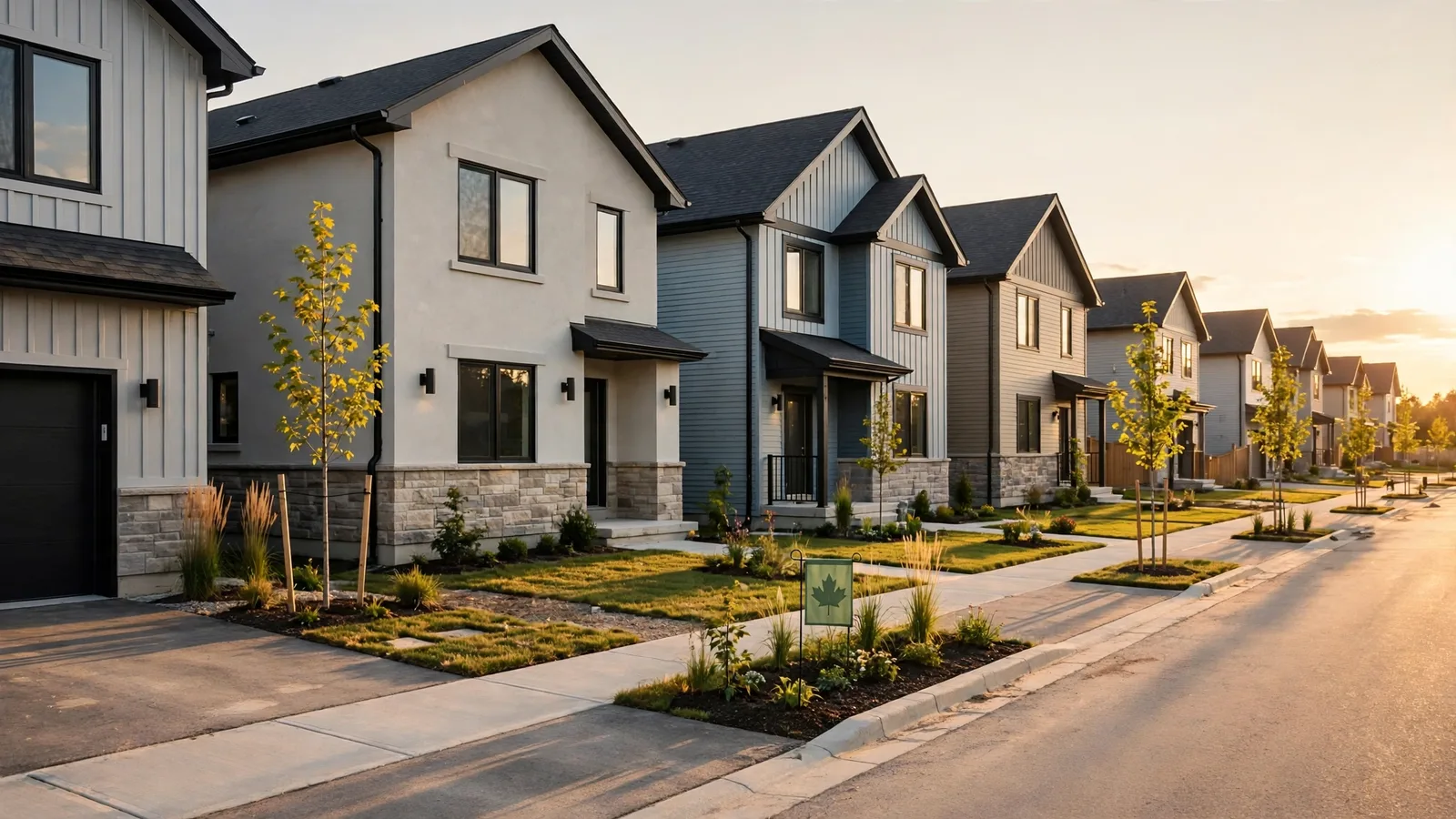
What Is a Semi-Detached Home? Meaning, Pros and Cons in Ontario
Half of a pair: one shared wall, your own side, your own lot — the semi-detached is the classic step between a townhouse and a detached house, and in older Ontario neighbourhoods it is often the value play on the street. What the term means, what the shared wall really involves, and who a semi suits.
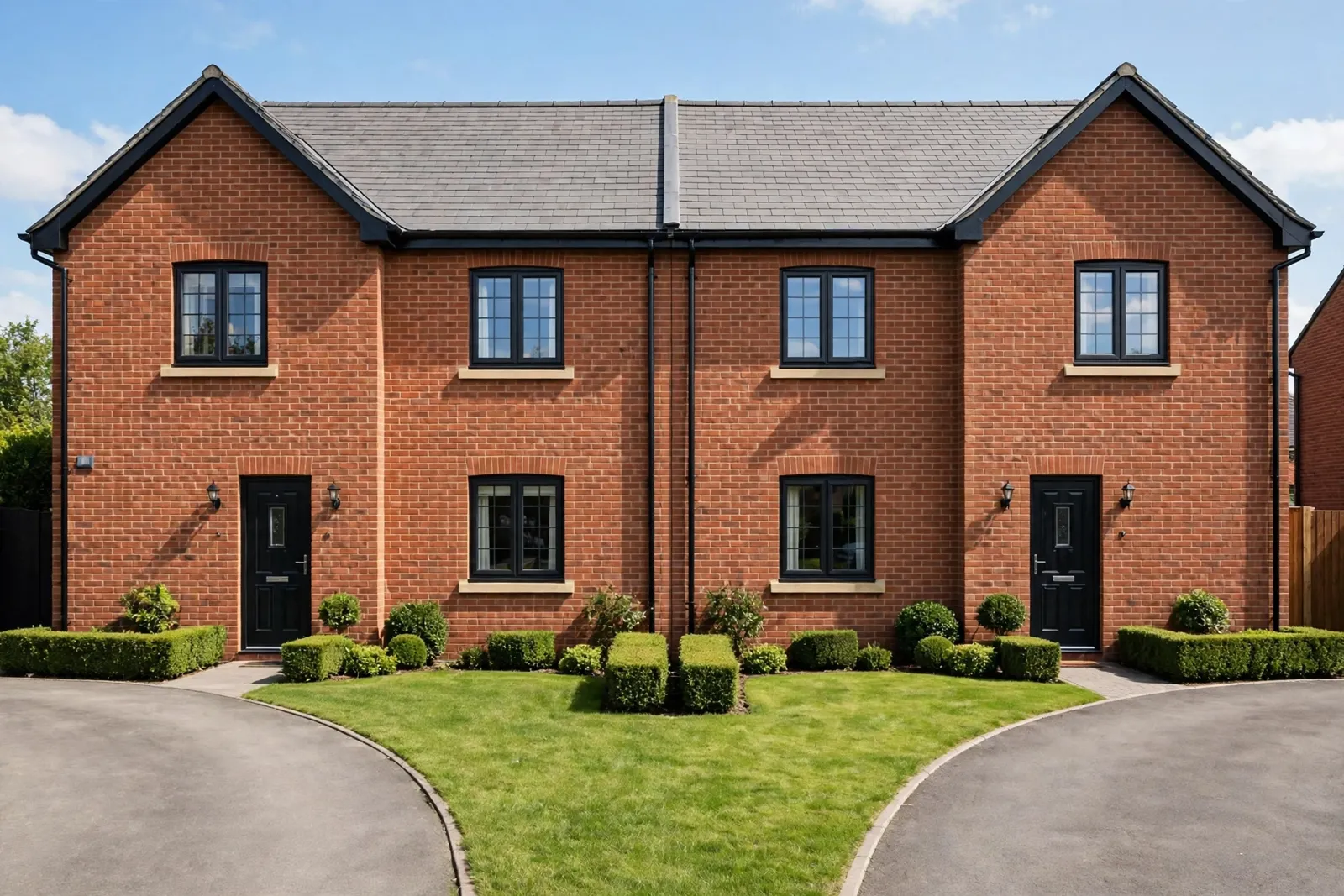
The definition
A semi-detached home is one half of a pair of houses built as a single structure and joined along one shared side wall. Each half is a separate home on its own lot, with its own title, entrance, systems and its own driveway. From the street it looks like one wide house; legally and practically, it is two. In listing language, "semi-detached" (often just "semi") means one shared wall, one neighbour, and everything else yours.
A close cousin: the link-detached home. Link homes look detached — no shared living-space wall — but the pair is joined somewhere minor, typically at the garages or at the foundation. They are legally attached even though they live like detached houses, so if a price looks like a detached bargain, check for the link.
Semi-detached vs. detached
The honest way to describe the difference: the gap between a semi and a comparable detached house on the same street is, in large part, the price of removing one shared wall. The detached house gives you open space and windows on both sides. The semi gives you three of the four sides and most of the same house — the same lot depth, driveway and backyard — at a meaningfully lower number.
That is why semis anchor so many older Ontario streetscapes. In established Toronto, Hamilton, Ottawa and London neighbourhoods, the semi was the standard family house of its era, built in brick pairs a century ago. Against a detached house, a semi there is often the value play: same street, same schools, similar bones, lower entry price.
Semi-detached vs. townhouse
Both are attached, but the experience differs. A semi has exactly one attached neighbour; a townhouse mid-row has two, plus a run of near-identical homes on either side. Semis also sit on wider, more conventional lots — a full driveway, a proper backyard, more frontage — and to follow the detached floor plan rather than rooms stacked across narrow floors. The full town comparison is in what is a townhouse; in short, a semi feels like a house that happens to have a partner, while a town feels like a row designed as a row.
What the shared wall really means
The party wall — the shared wall between the two halves — is the one piece that is genuinely joint. In most Ontario semis it sits on the lot line and serves as a structural, fire-separating wall for both homes. Day to day, its main effect is sound: you will hear a determined neighbour's music or a toddler's worst hour faintly through a wall built a century ago, though modern builds and properly insulated renovations fare far better. It is a reason to visit in the evening, when the neighbouring house is at full volume.
The wall also creates a small, ongoing etiquette. Repairs that touch it — repointing the brick, replacing a shared chimney, work where the two roofs meet — can require your neighbour's cooperation, and major alterations affecting the wall may need their consent and permits that account for the separation. None of this is onerous; in long-settled pairs it runs on neighbourliness and the occasional shared contractor. But it is the one part of a semi you cannot treat as yours alone — worth knowing before closing, not after.
What you own and what it costs to run
You own your half of the structure and your lot between its lines. There is no condo corporation and no monthly fee: a semi is freehold ownership, same as a detached house. That also means the maintenance bill is the detached bill, adjusted for one shared wall: the roof over your half, your furnace, windows and driveway. Where the halves share an element — the party wall itself, sometimes a mutual driveway in older neighbourhoods — costs are split by agreement when work is needed.
Routine costs lean slightly in your favour: one wall is insulated by your neighbour's heated home rather than exposed to January, so heating runs a little cheaper than in a comparable detached house. The savings are real but modest — the semi's financial story is written in the purchase price, not the utility bill.
The pros
A house's floor plan and a lot at less than the detached price on the same street — that is the semi's case in one line. You get a private entrance, a driveway, a backyard and no condo fees, with only one attached neighbour. In older neighbourhoods they also offer what new construction rarely does: mature streets and a century of settling already behind them.
The cons
One shared wall means some sound, some coordination, and a neighbour whose renovation choices can touch your home more directly than a detached owner's ever would. Resale cuts both ways: your half is compared against the other half, and a neglected twin can drag on your value and your view. Semis can also be harder to extend — an addition must respect the shared wall and the narrower lot — and the oldest stock carries old-house quirks: wiring, plumbing and insulation from another era.
Who a semi-detached home suits
A semi suits buyers who want a detached-style house on a particular street and are willing to trade one wall for the address; families who need the floor plan and the yard; and first-time buyers graduating from a condo or a town who want one neighbour instead of two. It suits less well if absolute quiet is non-negotiable, or if your plans include an addition that needs room on both sides.
The bottom line
A semi-detached home is half of a pair and a whole house: your lot, your title, your bills, one wall held in common. It is the classic step between a townhouse and a detached — and on many Ontario streets, the smartest money on the block. Start with the live market and browse semi-detached homes live across Ontario to see the shared-wall discount on your streets.