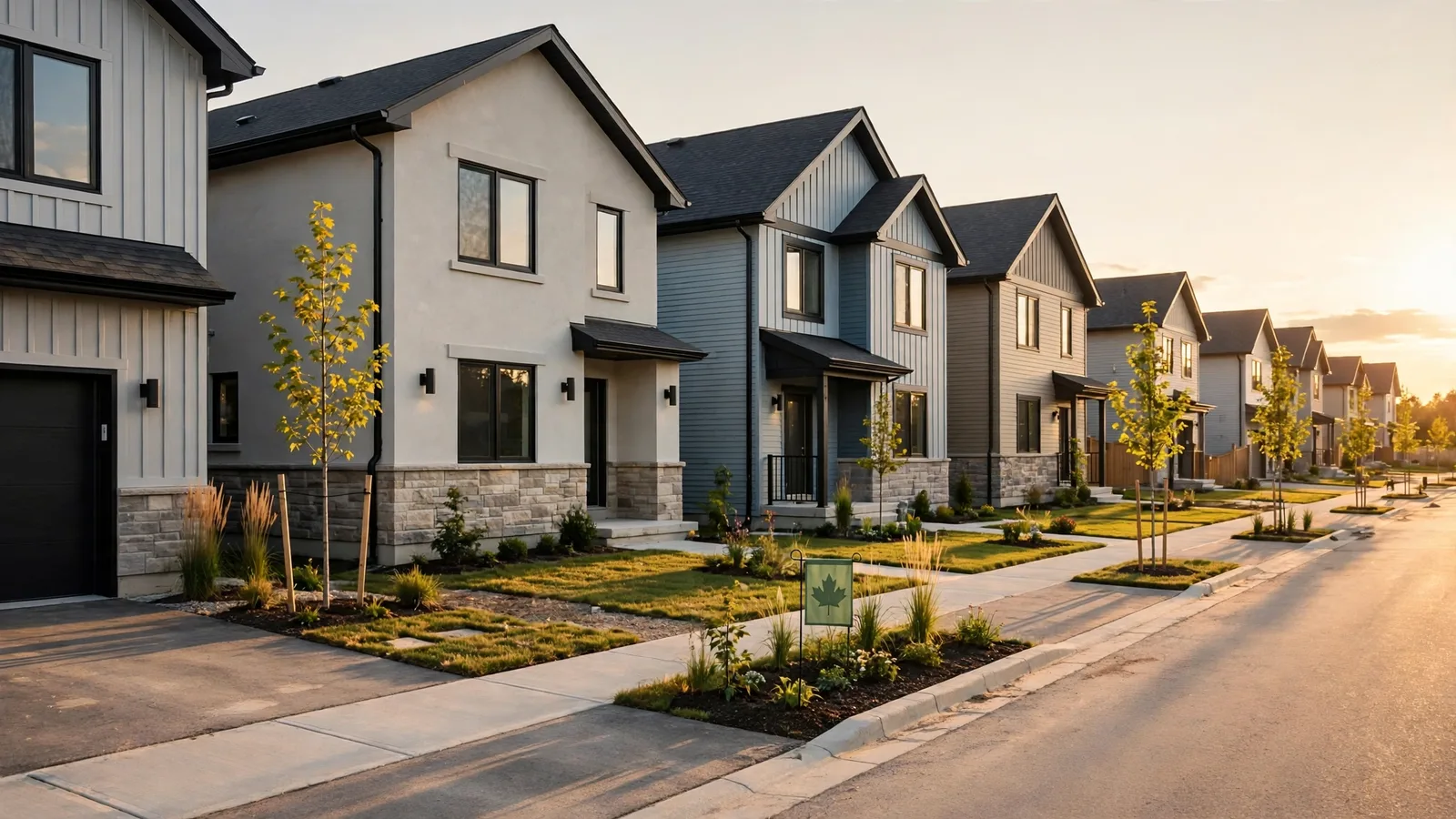
Backsplit vs Sidesplit vs Raised Bungalow: What's the Difference?
Backsplit, sidesplit, raised bungalow — three different houses that listings constantly confuse. The one-question test that tells them apart, a side-by-side comparison of layout, stairs, basements and price, and which one suits which buyer.
The one-question test
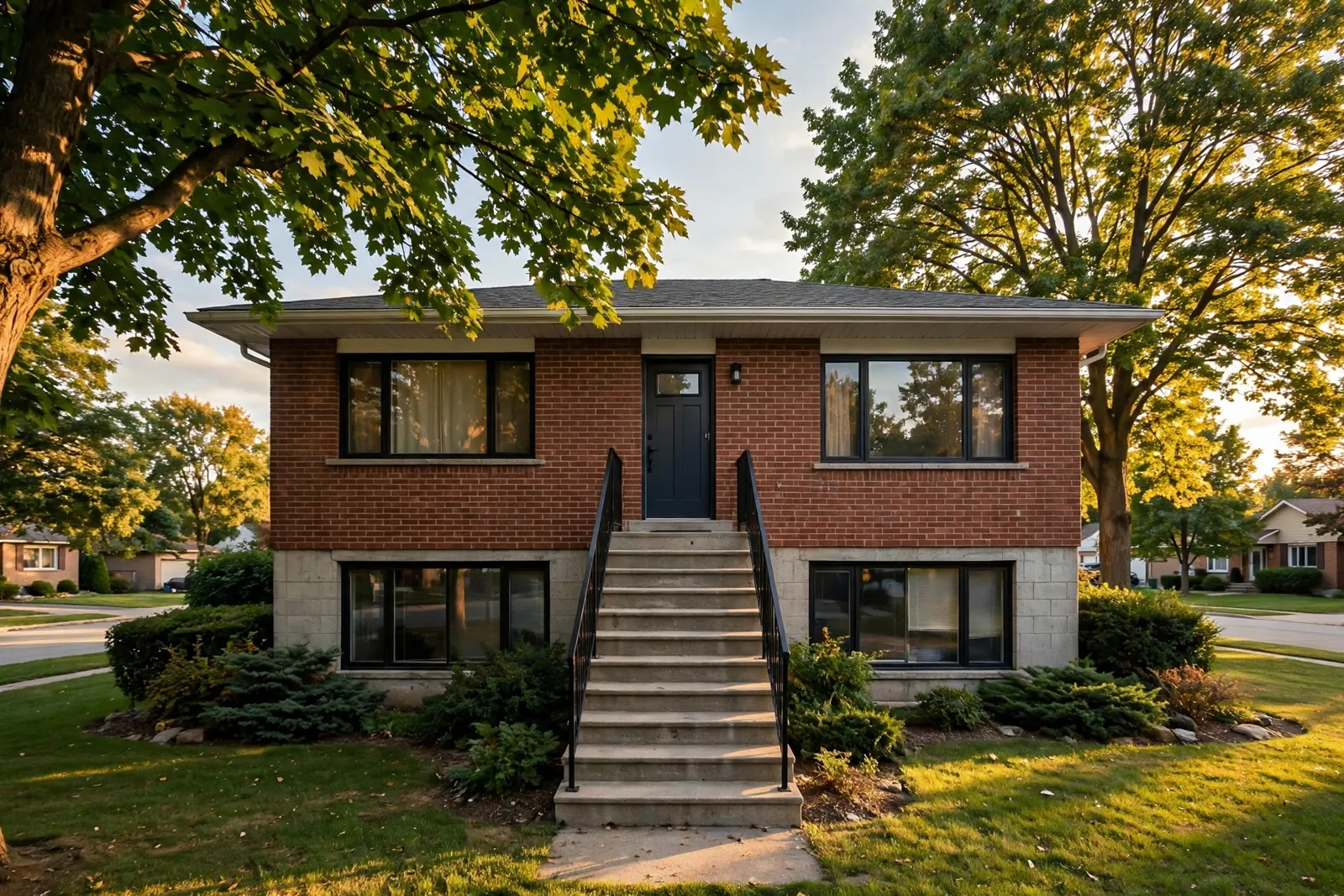
Ask: where does the house step? A backsplit steps from front to back — bungalow face, staggered levels behind it. A sidesplit steps side to side — you can see the two sections from the street. A raised bungalow does not step at all: it is a single-storey house lifted on a tall foundation, and you climb a full flight of front steps to prove it. Everything else — price, basement quality, who the house suits — follows from that one answer.
Side by side
| Backsplit | Sidesplit | Raised bungalow | |
|---|---|---|---|
| Where it splits | Front to back | Side to side | It doesn't — one level, lifted |
| From the street | Looks like a bungalow; the split hides | Two sections, rooflines step visibly | Bungalow on stilts; tall front steps |
| Levels | 3–4 half-levels | 3–4 half-levels | Main floor + full basement |
| Stairs | Short flights everywhere | Short flights everywhere | One full flight at the door, then flat living |
| Basement | Partial, under the front/main levels | Partial, plus a lower level at grade | Full footprint, high ceilings, big windows |
| Typical era | 1950s–1970s suburbs | 1950s–1970s suburbs | 1960s onward, still built today |
| How listings code it | "Bungalow" | "Bungalow" | "Bungalow-Raised" — its own style code |
The listing-data quirk
On the MLS, only one of the three has its own name. Raised bungalows are coded "Bungalow-Raised" — as of November 16, 2026, there were 2,603 of them listed for sale in Ontario, out of 15,820 bungalow-style listings in total. Backsplits and sidesplits have no style code of their own; they are filed under plain "Bungalow" alongside true one-storey homes. That is why split-levels keep ambushing buyers at showings arranged from bungalow searches: the data cannot tell you which bungalow is which. The photos can — count the front steps and look for the roofline step.
Basements: where the three really diverge
The raised bungalow's basement is its superpower. Because the whole house is lifted, the basement gets full-height ceilings and full-size windows at or above grade — finished space that lives like a ground floor and often supports a legal secondary suite, subject to municipal rules. The sidesplit's lower level is nearly as good: at grade on the high side, frequently with a walkout. The backsplit's basement is the most conventional of the three — partial footprint, smaller windows, more cellar than living space — though its front lower level, where fitted out, shares the sidesplit's at-grade advantage.
Price and resale
All three forms tend to price below conventional two-storey detached homes of similar size, because stairs narrow the buyer pool — the splits most of all. Raised bungalows hold the broadest appeal of the three: once you are up the front steps, daily life happens on one flat level, which keeps downsizers and young families both in the market. Backsplits and sidesplits sell to buyers who actively like the separation the levels create, and they reward patience at both ends of the transaction. For current asking prices across the bungalow family, see how much bungalows cost in Ontario.
Telling them apart at a showing
Three tells, in order. Count the front steps. A full flight of eight or more to the front door means a raised bungalow — the house is lifted, and everything inside sits on two levels: main and basement. Look at the roofline from across the street. If the roof steps up partway across the facade, it is a sidesplit; if the roofline runs level while the back of the house grows a second storey, it is a backsplit. Stand in the foyer. Splits of both kinds greet you with a choice of half-flights, up and down, within a few steps of the door. A raised bungalow's foyer, by contrast, usually splits the difference itself — a landing with a full flight up to the living level and a full flight down to the basement. When in doubt, the basement tells the truth: full footprint and tall windows means raised; partial footprint and a step in the foundation wall means a split.
Which one suits you
Choose a raised bungalow if you want one-level living, a bright full basement or suite potential, and you can accept the front steps. Choose a sidesplit if you want bedrooms clearly removed from living space and an at-grade lower level, on a wide suburban lot. Choose a backsplit if you like the split-level separation, want the most house for the money in an established neighbourhood, and stairs are a non-issue for everyone in the household — including the future buyer you will eventually sell to.