What Is Interim Occupancy? The New-Condo Limbo, Explained
Interim occupancy is the limbo between getting your new condo's keys and actually owning it: you live there and pay a monthly occupancy fee, but title, mortgage and ownership wait for registration. How the fee is built, how long it lasts, and how to budget for it.
The definition
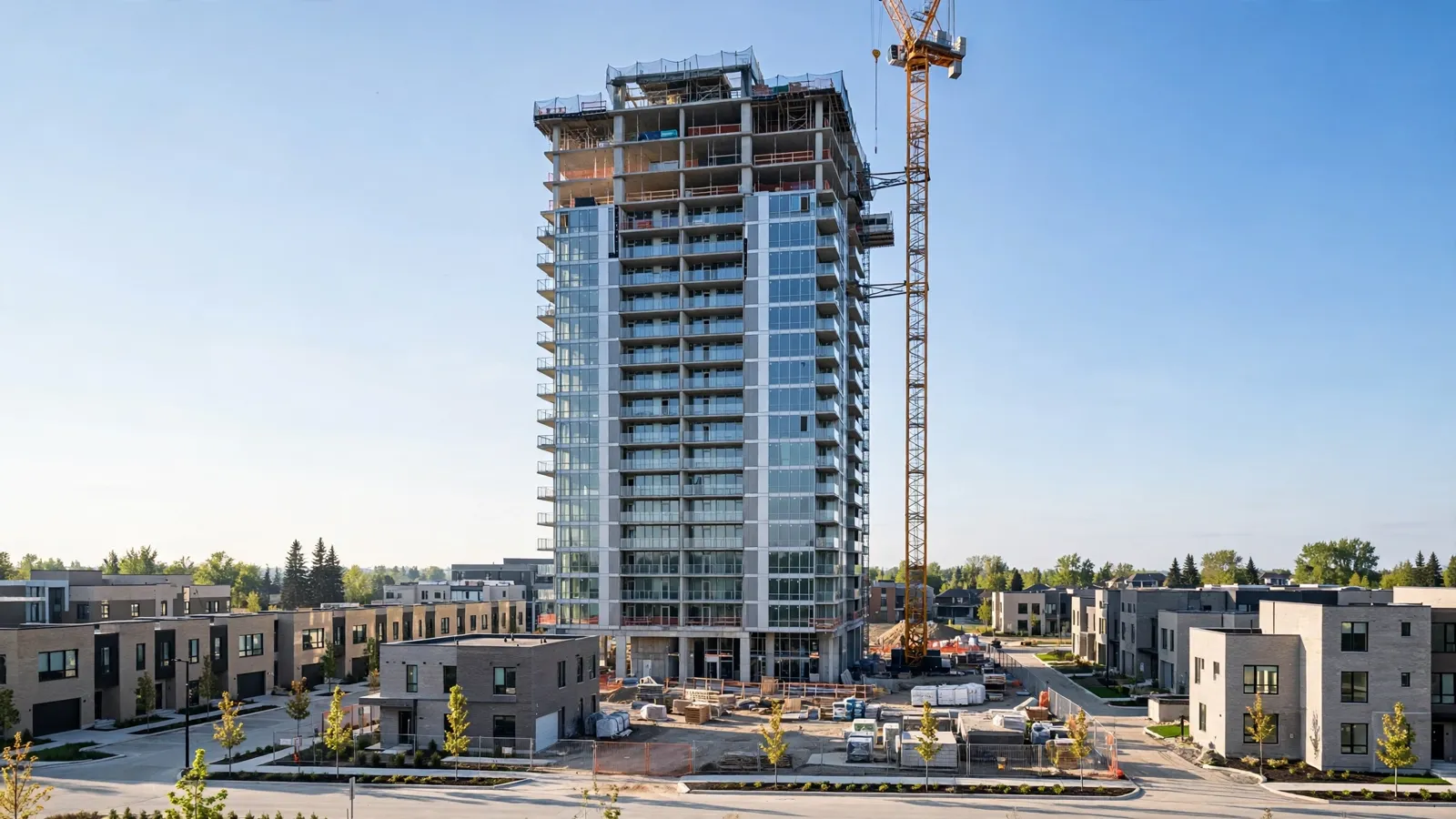
Interim occupancy is the in-between period in buying a newly built Ontario condo: the building is finished enough for you to move in, but it is not yet legally registered, so you cannot own your unit yet. You occupy it under your purchase agreement — living in the home, paying a monthly occupancy fee — while the developer completes registration of the condominium. Only at registration does final closing happen, title transfer to you, and your mortgage begin. For houses and freehold towns bought from a builder there is no equivalent stage; interim occupancy is a condominium creature, created by Ontario's Condominium Act.
Buyers are often surprised it exists. You get keys, move your furniture in, and start paying monthly — but the unit is not yours, you have no mortgage on it, and the developer is still the legal owner. Understanding the fee, and how long this limbo can last, is essential budgeting for any pre-construction purchase. It is one of the biggest practical differences we flag in new construction vs resale.
The occupancy fee: three parts, none of it equity
The monthly occupancy fee — buyers call it the "phantom mortgage," because it feels like a mortgage payment that builds nothing — is set by the Condominium Act and has exactly three components:
| Component | What it is |
|---|---|
| Interest | Interest on the unpaid balance of your purchase price, at the rate prescribed under the Act, calculated monthly |
| Taxes | An amount on account of the unit's estimated municipal property taxes |
| Common expenses | Your unit's projected share of the building's common expenses (its condo fees) |
To make that concrete: on a $600,000 unit with $480,000 still owing after your deposits, the interest component alone at a 5% prescribed rate would be about $2,000 a month — before taxes and common expenses. And here is the part buyers must hear plainly: none of the occupancy fee is credited against your purchase price. The interest portion does not pay down a dollar of what you owe. It is, in substance, rent paid to the developer for living in a unit you do not yet own, which is why a long interim period is a real cost of buying pre-construction, not a technicality.
How the timeline runs
Your purchase agreement sets an interim occupancy date, governed by the Statement of Critical Dates that comes with every new-condo purchase and by Tarion's delayed-occupancy rules — if the developer misses its dates beyond the permitted limits, compensation and, in defined cases, termination rights can follow. When the developer declares the unit ready, interim occupancy closing happens: you deliver the next deposit instalment due under your agreement, sign the occupancy documents, and take possession. From there, registration can take weeks or many months — the developer must satisfy the municipality and register the condominium plan and declaration, and timing is largely outside your control. When registration completes, final closing follows quickly: the balance is paid, your mortgage funds, title transfers, and the occupancy fees stop.
What life in interim occupancy means in practice
You cannot get your mortgage yet. Lenders fund on title, so your mortgage starts at final closing — keep your pre-approval and rate hold timeline in mind, because a long interim period can outlast them. You are not an owner. You cannot sit on the condo board, and the building's rules during occupancy are the developer's. Your deposits are due on schedule. The deposit structure in your agreement usually ties an instalment to occupancy — budget for it alongside the monthly fee, and see our closing costs guide for the full picture at final closing, including development levies. Selling is restricted. Moving the unit before registration means an assignment sale, which typically needs the developer's written consent and a fee. Renting may be restricted too — many agreements limit leasing during interim occupancy; check before you count on it.
How to protect yourself before you sign
The time to manage interim occupancy is at the purchase table, years before you get keys. Ask how long the developer expects interim occupancy to run on this project, and model the fee in your budget at a realistic rate — a six-month interim period on a typical unit can cost five figures in interest alone. Confirm which deposit instalment falls due at occupancy. If you are buying partly to rent the unit out, get the leasing rules during occupancy in writing. And keep your own file of the critical dates: Tarion's protections only help buyers who know their dates were missed. None of this makes pre-construction a bad buy — registration limbo is a known, priceable cost — but it should be priced in, not discovered.
Frequently asked questions
Is interim occupancy the same as closing?
No. Interim occupancy is possession without ownership: you live in the unit and pay a monthly occupancy fee, but title has not transferred and your mortgage has not started. Final closing happens after the condominium registers, when title transfers to you.
Do occupancy fees go toward my purchase price?
No. The occupancy fee — interest on the unpaid balance, an amount for taxes, and projected common expenses — is not credited against what you owe. It is effectively the cost of occupying the unit during the registration period.
How long does interim occupancy last?
It varies by project, from a few weeks to many months. It ends when the developer completes registration of the condominium, which depends on municipal approvals and the developer's paperwork — timing that is largely outside the buyer's control.
Can I sell my unit during interim occupancy?
Only by assigning your purchase agreement, which typically requires the developer's written consent and an assignment fee. You cannot sell the unit itself, because you do not hold title until final closing.