What Is a Link Home? The GTA Listing Term, Explained
A link home looks detached and is usually sold as one — but below ground it shares a foundation wall with its neighbour. How the form works, how it differs from semis and true detached homes, what it does to price, and what to check before you buy.
The definition
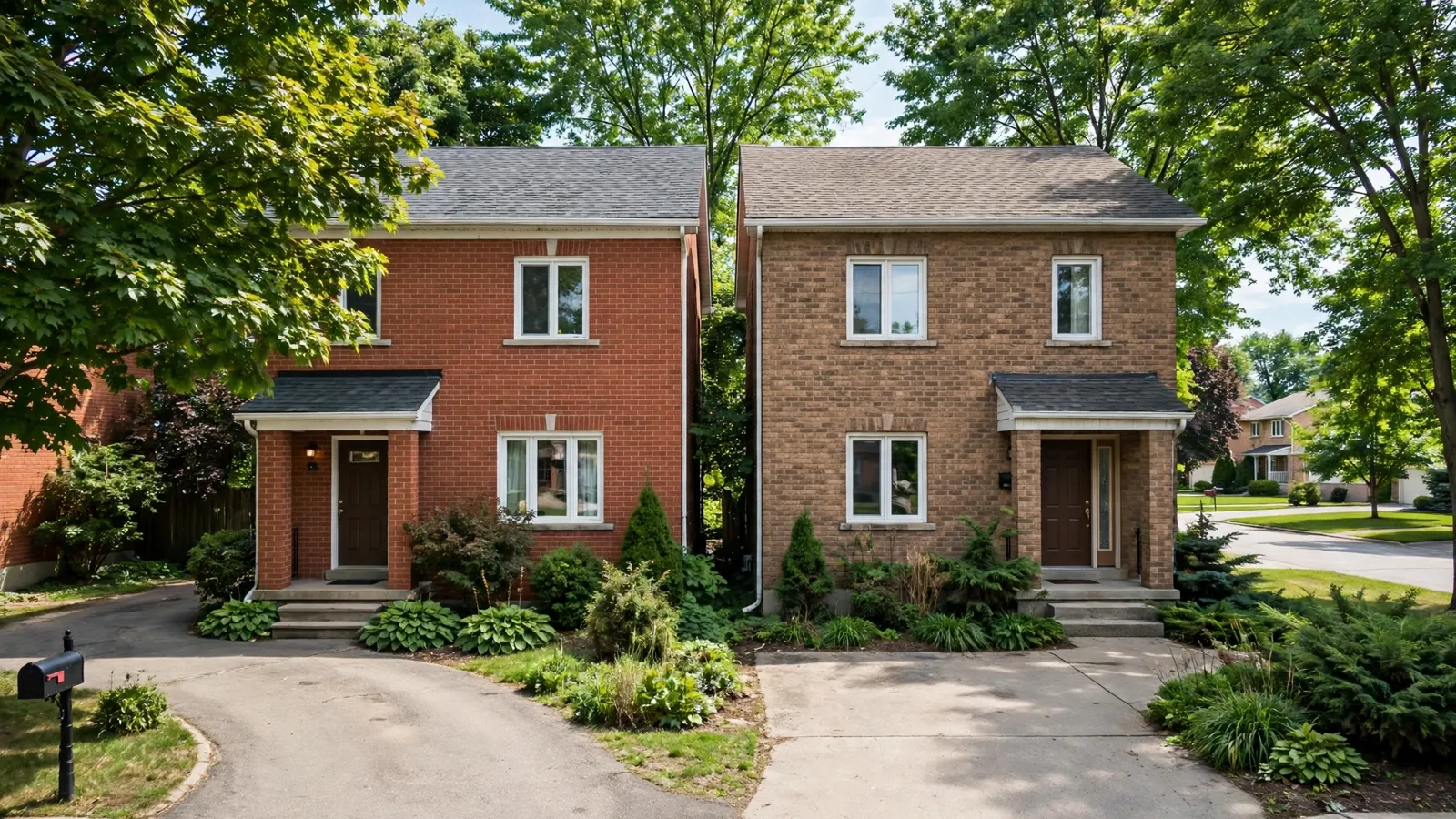
A link home — also written link-detached — looks like a detached house and is usually sold as one, but it is joined to the neighbouring house by a shared structural element below grade. In the standard Ontario form, the two homes share a common foundation wall or linked footings: above ground the houses stand separate, with a gap between them and their own roofs, walls and driveways, but at the basement level the two foundations touch or share a wall. From the street, it reads as a detached house that just happens to sit very close to its neighbour.
Link homes were built in large numbers across GTA suburbs in the 1970s and 1980s — Scarborough, Markham, Mississauga, Brampton and their neighbours — because the form lets builders squeeze two "detached" houses onto lots too narrow for two genuinely detached homes with full side yards, while still marketing them as detached. If you are reading listing descriptions in those suburbs, you will see "link" constantly; it is a term buyers google from the listing itself, which is exactly why it deserves a plain explanation.
Link, semi, detached: the neighbours, explained
| Form | Above grade | Below grade |
|---|---|---|
| Detached | Freestanding on all sides | Own foundation, no shared structure |
| Link home | Freestanding — its own walls, roof and yard | Shared foundation wall or linked footings with the neighbour |
| Semi-detached | Shares a full wall with the neighbour, above grade | Shares that wall (and often the foundation under it) too |
| Freehold townhouse | Shares walls with one or two neighbours in a row | Shares walls and foundation in the row |
There are variants. Some "link" homes are joined only by a shared garage wall at grade, and some by a short connecting section. What matters for every variant is the same question: what, exactly, is shared, and where? The listing will say "link." The survey and the property inspection should tell you the rest.
What the link means in practice
Ownership is freehold. A link home is usually owned outright, on its own lot, with no condo corporation and no monthly common-element fees — a key difference from a POTL townhouse, where the "freehold" label hides condo fees for common elements. Confirm the title in any case: most link homes are freehold, and that is part of their value. Insurance and lending treat it as detached. Insurers and lenders generally underwrite link homes as detached dwellings, since the house itself stands alone — though you should always confirm with your insurer rather than assume. Resale sits between semi and detached. Link homes typically price above comparable semis on the same street and below genuinely detached homes of the same size, reflecting the narrow side yard and the shared foundation. The neighbour matters a little more. Any major foundation work — waterproofing, a crack repair, underpinning — can involve the shared wall, so it is worth knowing who lives next door and how the wall is held up when work is needed. Sound is not a semi-detached issue. Because the houses are separate above grade, you do not share a party wall with a neighbour's living room the way a semi does.
What to check before you buy one
Start with the survey and the legal description: confirm the lot lines, and whether any easement or shared-services agreement is registered for the foundation or drainage. In the basement, look at the shared wall itself — staining, cracks or efflorescence there matter more than on a freestanding wall, because the repair conversation involves two owners. Ask how the driveway and side passage are held: many link homes have a narrow side yard that is easy to mistake for your own. And decode the listing language: "link detached" is the honest label, "detached" alone on a lot with a 10-foot frontage gap deserves a second look, and our guide to decoding Realtor.ca listing descriptions covers the other terms sellers use to soften a property's form. The form itself is a good one — a detached-feeling home for semi-adjacent money — as long as you buy it with your eyes open about what is shared, and where.
Frequently asked questions
Is a link home detached or semi-detached?
It is sold and usually listed as detached: above grade the house is freestanding, with its own walls and roof. It differs from a true detached home in that it shares a foundation wall or linked footings with the neighbour below grade. It is not a semi-detached, which shares a full wall above grade.
Do link homes have condo fees?
Usually no. Link homes are typically freehold on their own lot, with no condo corporation and no monthly common-element fees. Always confirm the title — if a home is described as a parcel of tied land (POTL), common-element fees apply even though it looks freehold.
Are link homes cheaper than detached homes?
Generally yes. On the same street, link homes typically price above comparable semi-detached homes and below genuinely detached homes of similar size, reflecting the narrow side yard and the shared foundation.
What connects two link homes?
Most commonly a shared foundation wall or linked footings below grade. Some variants are joined by a shared garage wall. The shared element is structural and below ground level — the living spaces above remain entirely separate.